What's happening.
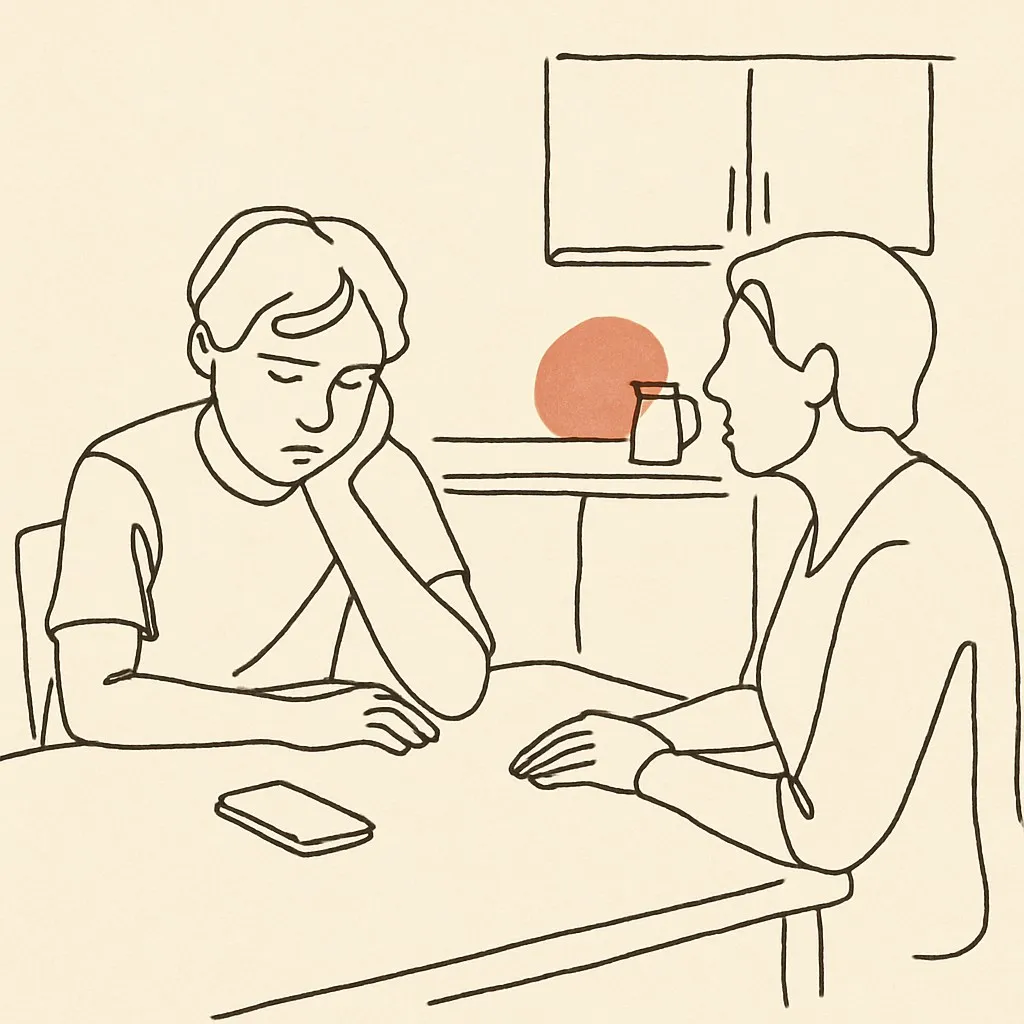
Your 14-year-old, head in hands: “I think my friends talk about me behind my back. I can feel it.” You sit down.
What we usually say — and why it backfires.
I'm sure they're not. You're being paranoid.
Why are you sure?
Because you're a great person and they're lucky to have you.
(parent's reassurance is unfalsifiable from the outside; doesn't help)
- “I'm sure they're not” has no data. Parent-certainty about teen-social dynamics is a tell that the parent isn't tracking.
- “You're being paranoid” labels the feeling instead of investigating it.
- “They're lucky to have you” is comfort offered without engaging the actual fear.
What works — and why.
Okay, let me ask the actual question — is there a specific reason, or is it more of a gut feeling that hit suddenly? Both are real, they just mean different things.
Mostly gut. But also: Lily and Maya keep going quiet when I walk up.
Okay. So it's both — specific observation AND a feeling. The going-quiet thing is real data, not paranoia. Couple of possibilities: they might be talking about something they don't want you to know about that ISN'T you (a surprise, a thing about someone else, their own stuff), OR they're actually talking about you. Worth asking Lily directly when you're alone — 'hey, is everything okay with us, you guys go quiet when I walk up' — straightforward, not accusatory. Either answer gives you data.
- “Specific reason or gut feeling that hit suddenly” distinguishes anxiety hallucination from observation.
- Naming that going-quiet IS real data (not paranoia) validates the teen's perception.
- Giving them a script for the direct ask (“hey, is everything okay with us”) is the meta-skill — gets data without escalating.
Key phrases to reach for in the moment.
- Is there a specific reason, or is it more of a gut feeling that hit suddenly?
- [The behavior they described] is real data, not paranoia.
- Possibilities: they're talking about something that isn't you, OR they are. Worth asking directly.
- [Script: 'Hey, is everything okay with us, you guys go quiet when I walk up.']