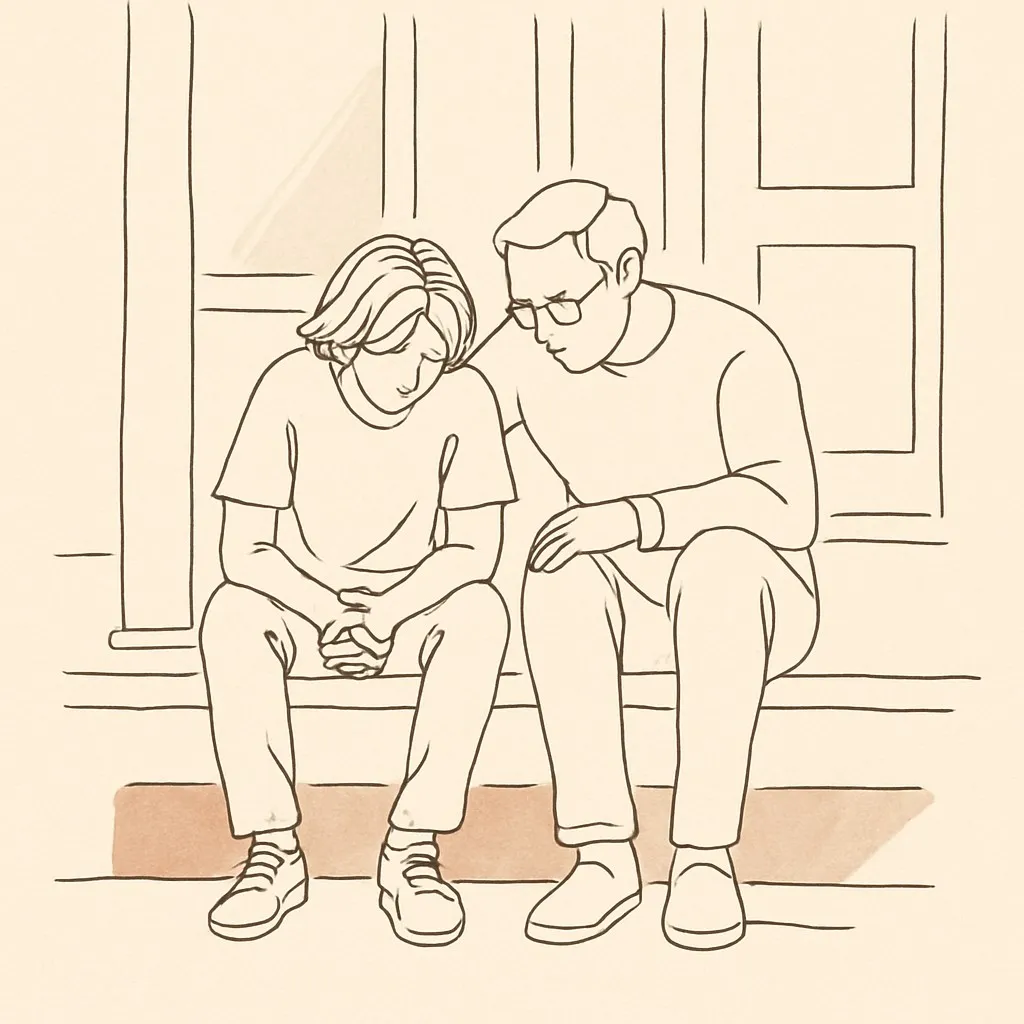
What's happening.
Your 13-year-old, weeks after the fact: “I took something from Sephora. I didn't pay for it. I've been thinking about it.” You set down the phone.
What we usually say — and why it backfires.
You STOLE something? We did not raise you to be a thief.
I know. That's why I'm telling you.
We're going back tomorrow and you're paying for it AND apologizing to the manager.
(immediately regrets telling you; learns guilt is its own punishment, no point compounding it)
- “We didn't raise you to be a thief” is a character verdict on a single behavior. The teen is already there in their head; you piled on.
- The march-them-back-to-apologize move can be right AND is the wrong opening — it skips the “why did this happen” conversation entirely.
- The teen learns that the cost of confession is shame-plus-shame, and the next thing they steal stays buried.
What works — and why.
Okay. Thank you for telling me. That clearly took a while to bring to me — tell me about it. What was the thing, why that thing, what's been on your mind about it.
It was a lip gloss. I had the money. I just… all my friends do it and it feels exciting and I wanted to see if I could. I felt bad like five minutes after.
That's a real answer. The feeling-bad is the part that matters — your conscience is functioning, which is the actual goal of all this. Here's what I think we should do — yes, go back and either pay or return it. Not because I'm punishing you, because it's how you close the loop for yourself so it doesn't sit. I'll go with you. The bigger conversation is about the friend group — if 'we all steal' is the norm, that's worth a look at. Not tonight, but soon.
- “That clearly took a while to bring to me” acknowledges the courage, which makes the next confession (the harder one) more likely.
- “Your conscience is functioning, which is the actual goal of all this” is the framing that turns guilt into growth instead of shame.
- Going back together (not making them do it alone) treats restitution as relational, not punitive. They'll close the loop willingly.
Key phrases to reach for in the moment.
- Thank you for telling me. That clearly took a while to bring to me.
- Tell me about it — what, why that thing, what's been on your mind.
- The feeling-bad is the part that matters — your conscience is functioning.
- Let's go back together to close the loop, not as punishment.