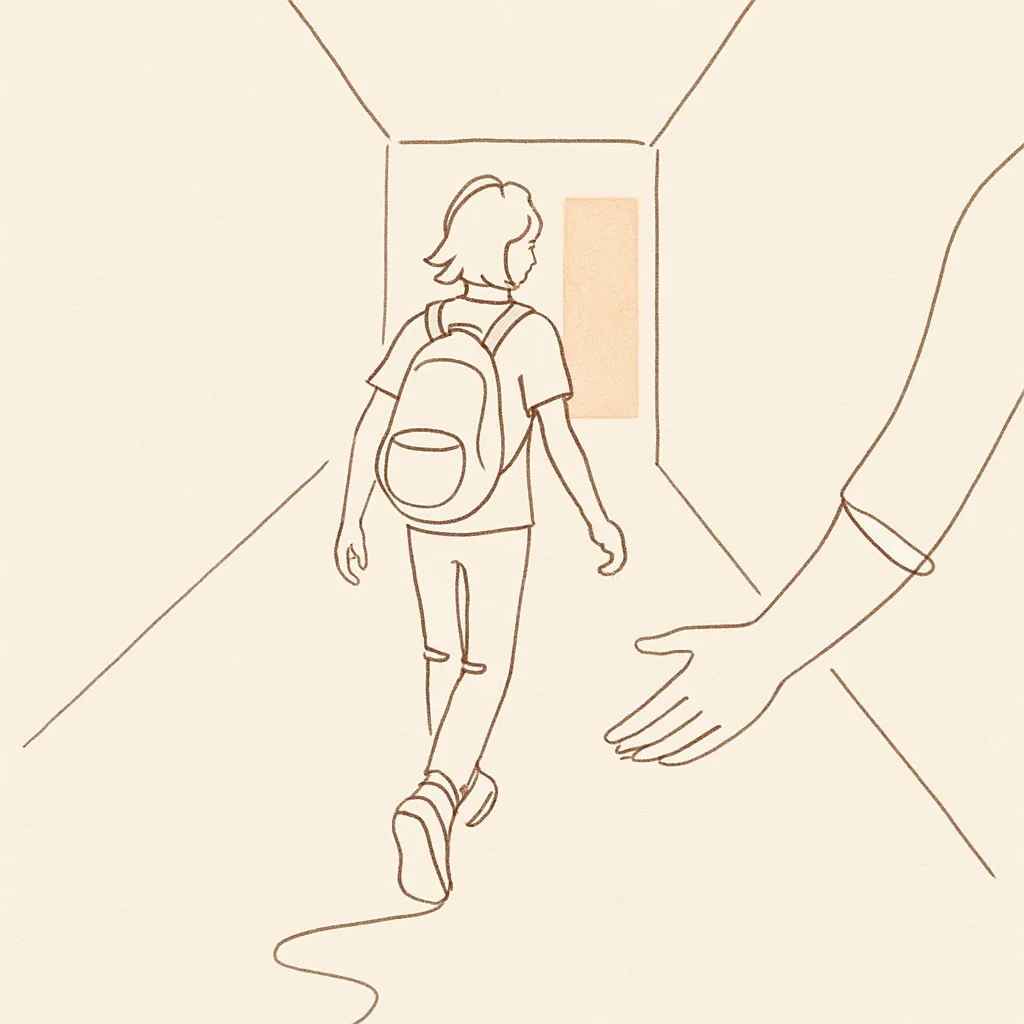
What's happening.
You take away the car keys for a weekend after a curfew miss. Your 16-year-old shouts, “I hate you!” and slams the door so hard a picture jumps off the wall. Your face is wet before you realize it.
What we usually say — and why it backfires.
(through the door) You don't get to talk to me like that. You're grounded for a month now.
GREAT. Add it on. I don't care.
I am DONE with this attitude.
ME TOO.
- Adding more punishment in a flooded moment is a parent reacting to their own pain, not the teen's behavior. The escalation is mutual and pointless.
- “You don't get to talk to me like that” is technically true and conversationally meaningless. It changes nothing.
- Both of you have committed to positions you'll regret. By tomorrow morning, the relationship has more damage than the curfew miss caused.
What works — and why.
(Parent waits 30 minutes. Doesn't go knock. Doesn't text. Stays put.)
(text, no caps) hey. i'm not mad. i know you don't actually hate me — you hate the consequence and that's fair. the consequence stands but the door is open.
(An hour later, the teen comes out for water.)
I didn't mean it.
I know. Want a hug?
...yeah.
- The 30-minute pause is medical — adolescent cortisol clears on that timeline. Nothing useful happens before it does.
- “I know you don't actually hate me” takes the literal interpretation off the table without making them apologize for it.
- Holding the consequence (keys stay gone) while opening the relationship door is the parenting skill — both can be true at the same time.
Why this script works on a teen brain.
Adolescent emotional flooding is a measurable physiological event. When a teen hits the "I hate you" point, their cortisol and adrenaline are at levels that put the prefrontal cortex effectively offline. Any conversation in the next 20-40 minutes is a conversation with a brain that cannot process it — every word lands as threat, every consequence registers as additional injury. This is why the second-best parental move in this moment is to do nothing, and the best is to text a calm note and wait.
The "hate" word itself is almost never literal. It's the strongest word the teen has access to for the felt experience of "the person I most need is also the source of the pain right now." That contradiction — needing the parent and resenting the parent simultaneously — is one of the hardest emotional configurations the developing brain handles. The parent who can hear the word, not take it as factual, and stay non-reactive teaches the teen the most important lesson of adolescence: strong feelings don't end relationships.
The split between holding the consequence (keys stay gone) and opening the door (text, hug offer) is what attachment researchers call "warm-firm parenting" — and it consistently predicts better adolescent outcomes on every measurable dimension. Soft on the relationship; firm on the rule. Most parents do firm-firm or soft-soft. The skill is doing both at once.
Same dynamic, different surface.
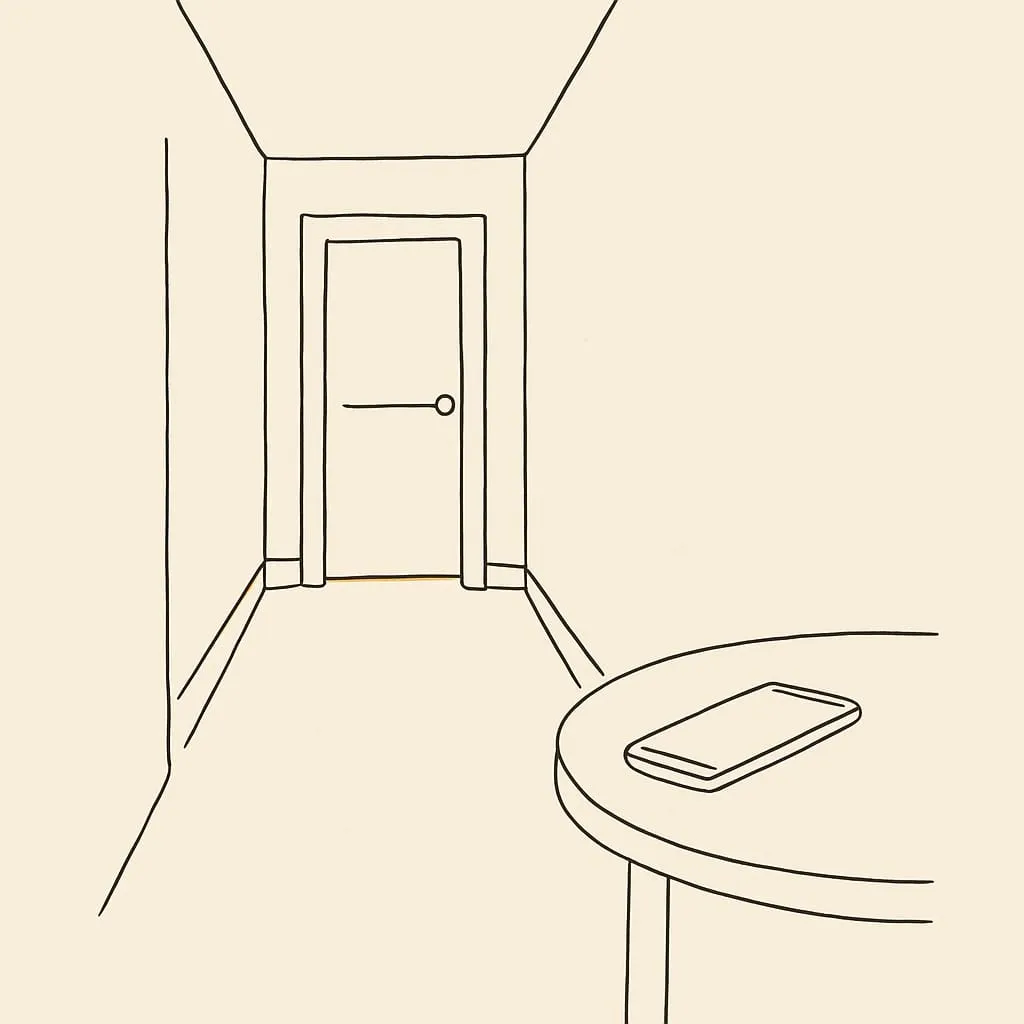
You confiscate your 14-year-old's phone after they ignored a screen-time rule for the third time. They lose it: "You are the WORST mother. I HATE this family." They throw the dish towel at the wall and storm upstairs.
What usually happens.
(yelling up the stairs) Then maybe you should move out and see how much you hate everyone else!
MAYBE I WILL!
Don't you dare slam that door!
(The door slams. Both parties feel terrible. The phone stays confiscated and the relationship costs more than it needed to.)
- "Maybe you should move out" is parental escalation matching teen escalation. The parent has now joined them in a flooded state — and a flooded parent has worse judgment than a regulated teen.
- Threatening the door is the parent picking a winnable but pointless fight. Even when you win, you lost the bigger thing.
- All of this happens in under 90 seconds. That's the cortisol window. Almost nothing said in it should be said.
What works better.
(Parent picks up the towel. Wipes the counter. Puts kettle on. Does NOT go upstairs.)
(45 minutes pass.)
(at the bottom of the stairs, calm voice) Tea's on if you want some. No conversation required.
(10 more minutes. Teen comes down, sits at the counter.)
I don't actually hate this family.
I know. I don't hate you either, even when you throw dish towels at the wall. Phone stays with me tonight; we'll talk tomorrow.
- Cleaning up the towel without addressing it is the parent doing the regulation work neither of you can yet talk about. Modeling is the lesson.
- "Tea's on, no conversation required" gives the teen a way back into the room without having to apologize first. They usually apologize anyway, once they're not cornered.
- Re-asserting the consequence (phone stays with me tonight) in a calm voice is the warm-firm landing. The teen learns: my big feelings did not change the rule, AND did not break the relationship.
Key phrases to reach for in the moment.
- (Wait 30 minutes. Don't engage.)
- I know you don't actually hate me.
- The consequence stands but the door is open.
- I love you. Want a hug?
When to use each one.
-
(Wait 30 minutes. Don't engage.)
Use after any flooded "I hate you." The 30 minutes is medical, not punishment. Set a literal timer if you need to.
-
Tea's on if you want some. No conversation required.
Use as the re-entry offer once the cortisol has cleared. Removes the apology requirement, which is what they're stuck on.
-
The consequence stands but the door is open.
Use to make the warm-firm split explicit. Both clauses matter; one without the other doesn't work.
-
I know you don't actually hate me.
Use once they've calmed down. Takes the literal interpretation off the table without making them apologize for it.