
What's happening.
It's Tuesday morning. Your 12-year-old is sitting on the edge of their bed, not moving. “I don't want to go to school.” Not a tantrum — a statement. You feel the day's plan unravel.
What we usually say — and why it backfires.
You have to go. Get dressed, we're already late.
I really don't feel good.
You felt fine an hour ago. Let's go.
Fine. Whatever.
- “You felt fine an hour ago” presumes physical sickness is the only valid reason — closing off any chance the teen is telling you something else is going on.
- Speed-pressuring (“we're already late”) ends the inquiry before it starts. You'll never know what was actually happening this morning.
- “Fine. Whatever.” is the teen complying physically while disengaging emotionally — and going to school in that state primes worse fallout.
What works — and why.
Okay. Tell me — is it your body, or is it something at school?
It's just… I really don't want to see Mia. She's been awful.
Ugh. That's hard. Walk me through what's been happening with her.
She's just turning everyone against me at lunch.
Okay. Here's what I think — you do need to go today, because Mia gets way too much power if you stay home for her. But we're going to talk strategy on the drive, and tonight we figure out a longer-term plan together. Deal?
- “Is it your body, or is it something at school?” is the open question that surfaces 90% of avoided mornings. It treats both as legitimate.
- Validating the friend-drama (“Ugh. That's hard”) before insisting on the school day means the teen feels seen, not just managed.
- Naming why they DO need to go (“Mia gets way too much power if you stay home”) is a reason that respects them — they understand power and they don't want to give it away.
Why this script works on a teen brain.
Pediatric mental-health researchers distinguish school refusal (anxiety-driven, a child who wants to go but can't) from school avoidance (a child who is choosing to avoid a specific situation) — and both from genuine illness, fatigue, or social-conflict overload. Each requires a different response, and you can only tell which is which by asking. The instinct to push past the refusal speed-runs the morning but loses the information that would have made tomorrow easier.
The binary question ("is it your body, or is it something at school?") is the single most useful diagnostic a parent has. It validates both options as legitimate and gives the teen a category to slot themselves into without having to construct an explanation. Nine times out of ten, the teen tells you which it is in one sentence — and from there, the rest of the conversation has somewhere to go.
The long-term move is the "longer-term plan together tonight" promise — and then actually doing it. Avoidance behaviors get harder to dislodge the longer they go unaddressed; researchers call this the "avoidance ratchet," where each day of avoidance makes return harder. The Tuesday morning when the teen first names it is the cheapest point to intervene. Promising tonight's planning session, and keeping the promise, is what prevents the ratchet from turning.
Same dynamic, different surface.
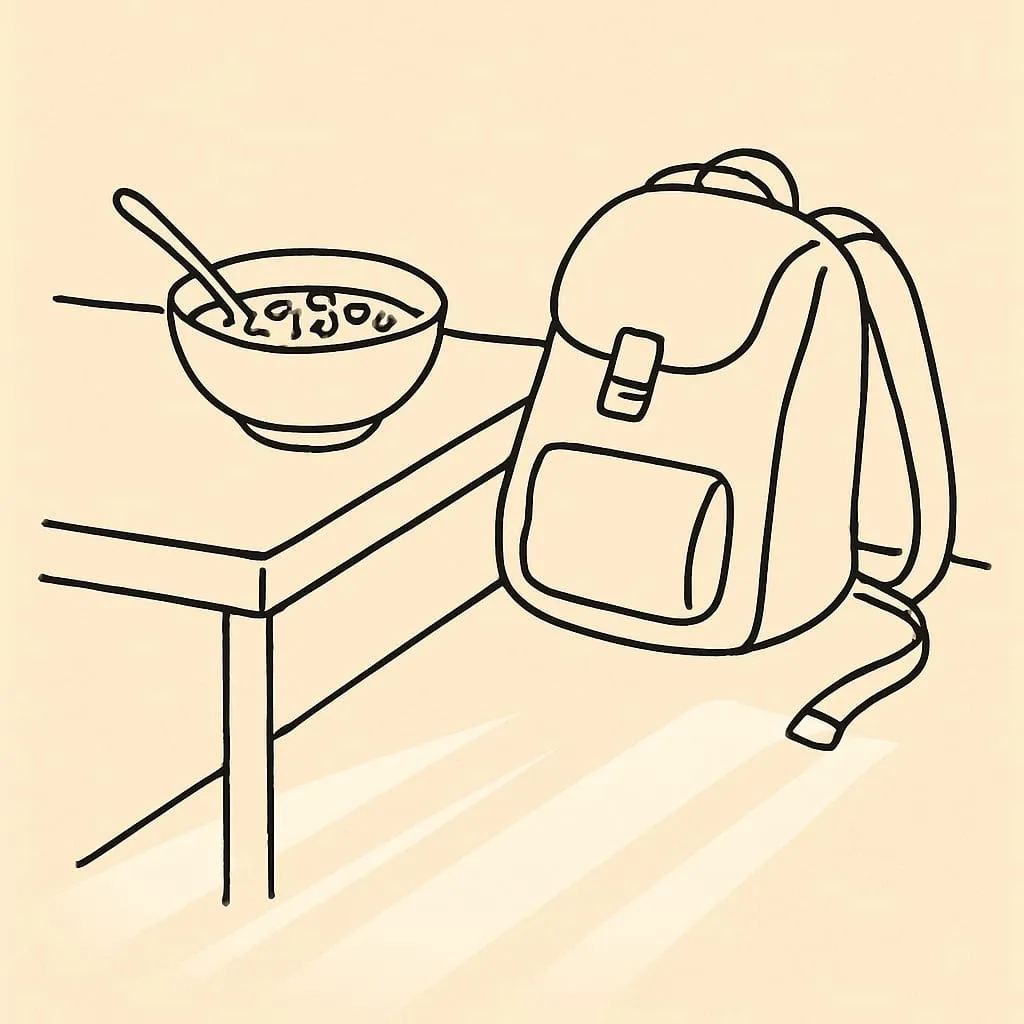
It's a Saturday morning. Your 17-year-old has a basketball game at 10. They're sitting at the kitchen table not in uniform, staring at their cereal. "I'm not going to the game. Tell Coach I'm sick." They're not sick. Something else is happening.
What usually happens.
You can't just not show up. The whole team is counting on you.
I don't care. Tell him.
I am not lying to your coach. Get dressed.
Then I'll tell him myself. I quit.
- Leading with team obligation is correct adult ethics and useless adolescent persuasion — you've prioritized a moral claim over the underlying problem you don't know yet.
- "I am not lying to your coach" is the parent picking the right fight at the wrong moment. The lie discussion can wait; the quit is what's escalating.
- "I quit" is the predictable next move and it's now a stated identity-level decision in a conversation that started about one Saturday.
What works better.
Whoa. Hang on. Is it your body, or is it something with the team?
It's... I had a bad fight with Marcus at practice Thursday. He hasn't talked to me since.
Ugh. Sitting in the locker room with that hanging over you sounds awful. Here's what I think — you do go today, partly because not showing up makes Marcus the story and you don't want him to be the story. After the game, you and I will figure out the Marcus situation. Workable?
...yeah.
- The binary question ("body or team") works for sports, school, family events — any avoidance has these two roots, and naming both is the diagnostic.
- "Marcus the story" is a teen-legible reason to show up that respects them. Adolescents understand status dynamics intuitively; use that fluency.
- Pre-committing to the after-game problem-solving gives the teen the relief of knowing the hard part has a place to live. Avoidance shrinks when there's a scheduled return.
Key phrases to reach for in the moment.
- Tell me — is it your body, or is it something at school?
- Walk me through what's been happening.
- Here's what I think — you do need to go today, because [specific reason].
- We're going to figure out a longer-term plan together tonight.
When to use each one.
-
Tell me — is it your body, or is it something at school?
Use as the diagnostic for any morning refusal. The binary frame surfaces 90% of underlying causes within one sentence.
-
Walk me through what's been happening.
Use after they name the category. Open-ended; you get the texture of the situation without prosecuting it.
-
You do need to go today, because [specific teen-legible reason].
Use when the answer is to attend anyway. The reason has to be one a teen brain accepts — status, optics, missed-opportunity — not adult-ethics framing.
-
Tonight, you and I figure out the longer-term plan.
Use to defer the durable fix. Then actually do it that night — avoidance ratchets when the conversation never happens.