The short version.
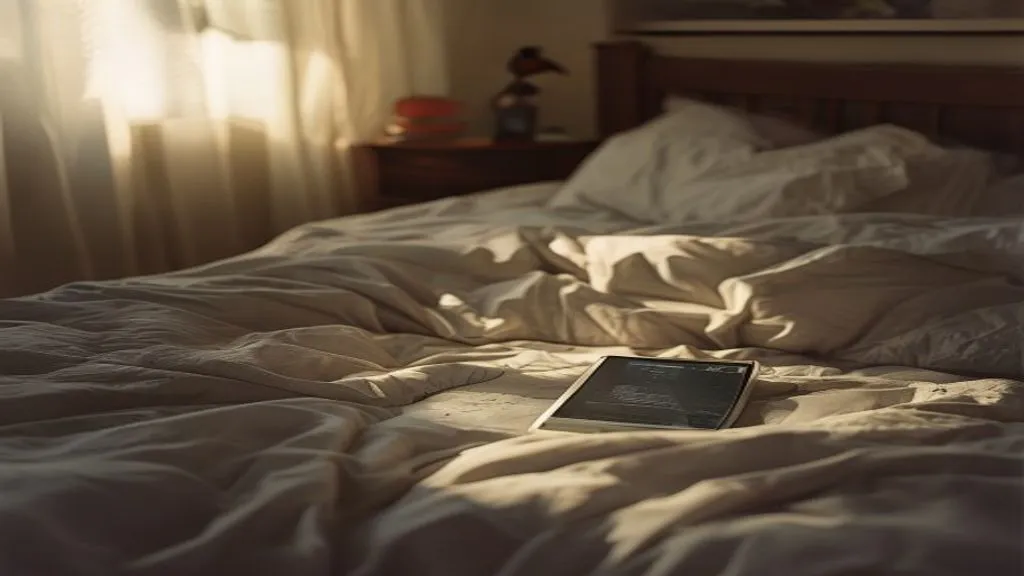
Bed rotting is the TikTok rebrand of spending all day in bed — scrolling, snacking, half-watching shows — and calling it 'self-care.' The framing makes a depressive pattern look intentional and aspirational. Real rest looks restorative; bed rotting tends to leave teens more tired, more anxious, and more isolated. It often masks early depression and, when the cycle repeats weekly, is itself a maintenance loop for it.
The platforms and contexts.
TikTok and Instagram Reels are the main carriers. The hashtag overlaps with 'lazy girl', 'dissociation core', and other aestheticized burnout content. The algorithm feeds it heavily to teens already showing signs of low mood or social-anxiety engagement patterns.
The timeline.
The phrase 'bed rotting' broke through on TikTok in mid-2023 and has stayed in the broader teen lexicon since. Clinical psychologists started flagging it within months as overlapping with depressive avoidance.
The core facts a parent needs.
- True rest restores energy; bed rotting drains it. The tell is how a teen feels at the end — calmer and ready, or flatter and emptier.
- Frequent bed rotting (multiple weekend days, or repeated school-day mornings) is one of the clearest behavioral markers of an emerging depressive episode in adolescents.
- Sleep researchers consistently find that more time in bed awake worsens sleep quality the next night — the opposite of what the aesthetic promises.
What's actually at stake.
- Reinforcement of depressive cycles: low mood → withdrawal → less reward → lower mood.
- School-avoidance escalation, especially after a social setback or bad grade week.
- Disrupted circadian rhythm, which compounds the depressive loop and is hard to reset.
The talk that lands — try it now.
Imagine you just learned your teen brushed up against this. You have 60 seconds before the conversation begins. What you say first decides whether the next 20 minutes opens the door — or slams it.
"What were you thinking? Give me your phone — now."
Panic + punishment in the same breath. The teen reads it as "every honest detail will be used against me." The phone comes; the truth doesn't.
What would you open with instead? Picture it for a beat — then…
"I want to ask about something — no trouble, I just want to understand it. Can we sit for five minutes?"
Curiosity, not court. Promise of safety in the first sentence. Time-bounded so it doesn't feel like a trap. Almost every teen says yes to five minutes.
Then, in those 5 minutes:
- Don't moralize the bed time — that hardens it. Instead, plan one small low-effort outing for the day (a walk, a coffee, a 20-minute task). Movement breaks the loop.
- Watch for the pattern, not the one day. A single rotting Saturday is fine; the same Saturday three weeks in a row is a signal.
- If it persists 2+ weeks with other depression signs (irritability, lost interest, sleep change), book a pediatrician or therapist visit. Don't wait for a 'real reason.'
Try saying it out loud once before you close this tab. Cool parents rehearse — yelled parents wing it.
Practice 200 more parent–teen scripts →Concrete next steps.
- Don't moralize the bed time — that hardens it. Instead, plan one small low-effort outing for the day (a walk, a coffee, a 20-minute task). Movement breaks the loop.
- Watch for the pattern, not the one day. A single rotting Saturday is fine; the same Saturday three weeks in a row is a signal.
- If it persists 2+ weeks with other depression signs (irritability, lost interest, sleep change), book a pediatrician or therapist visit. Don't wait for a 'real reason.'
See it for yourself.
Call or text 988 (Suicide & Crisis Lifeline, 24/7) · Text HOME to 741741 (Crisis Text Line) · Find a child psychiatrist at aacap.org · For immediate danger, call 911.