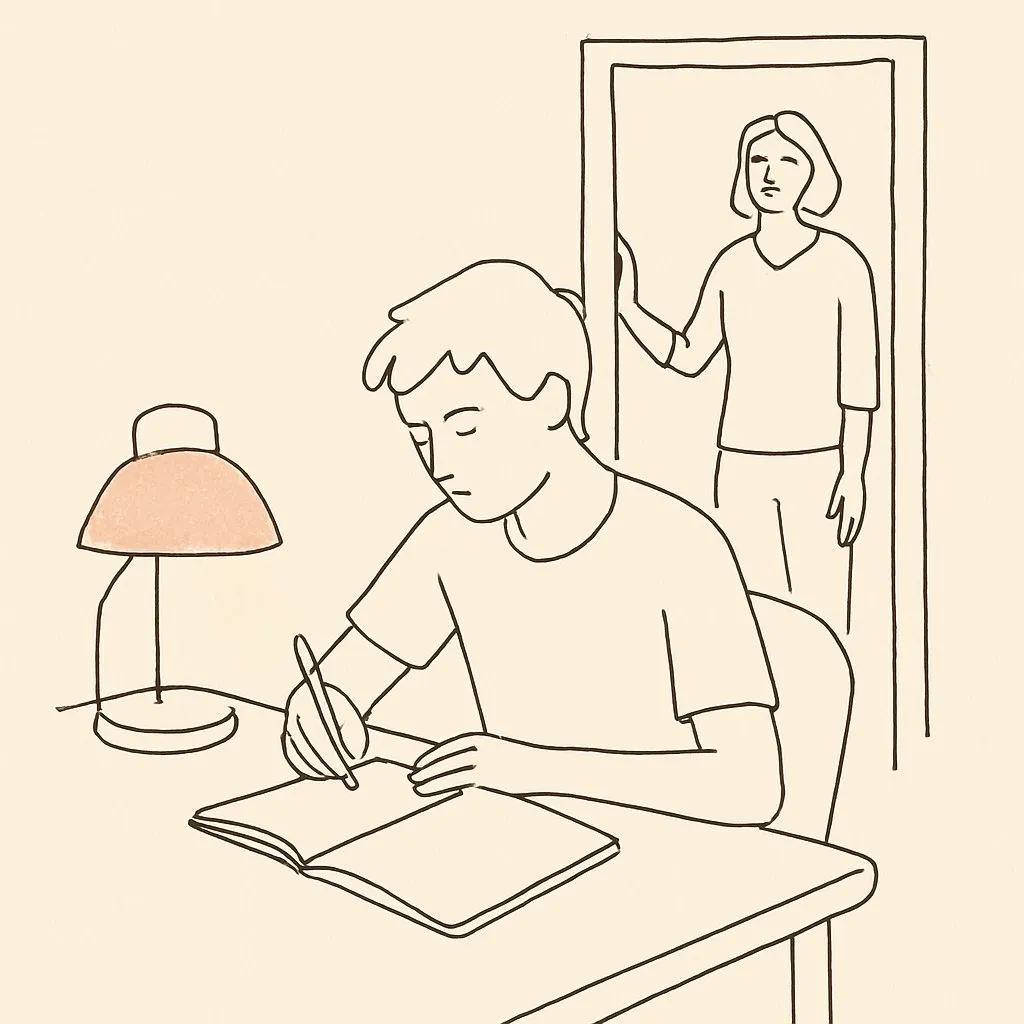
What's happening.
Your 16-year-old, head in hands at the desk, night before the SAT: “What if I fail?” You stand in the doorway.
What we usually say — and why it backfires.
You won't fail. You've worked really hard.
But what if I do.
You won't. Stop thinking like that.
(spends the night unable to share the actual fear because every voicing got 'you won't' returned to it)
- “You won't fail” is a reassurance the teen can't verify, said at the moment they most need to be heard.
- “Stop thinking like that” asks them to suppress an anxiety thought, which makes anxiety worse, not better.
- Now they're alone with the question they tried to share.
What works — and why.
Okay. Let's actually answer the question. What if you fail?
...like, my parents will be disappointed, I won't get into the school I want, my life is ruined.
Let me sit on the bed. Honest answers, one at a time. One: I won't be disappointed in you; I might be sad with you, that's different. Two: there's the retake in November, and most schools take the higher score, so 'won't get in' isn't decided by tomorrow. Three: your life is not on a single-test track no matter how it feels tonight. The fear is real. The catastrophe isn't.
...okay. That actually helps.
- “Let's actually answer the question” engages the anxiety thought instead of suppressing it. Anxiety hates being engaged.
- Walking through each catastrophe one by one with real specifics deflates them more effectively than reassurance.
- “The fear is real. The catastrophe isn't.” is the sentence to remember — and it works for performance anxiety at every age.
Key phrases to reach for in the moment.
- Let's actually answer the question. What if you fail?
- (Walk through each piece of the catastrophe with real specifics.)
- I might be sad WITH you. That's different from disappointed IN you.
- The fear is real. The catastrophe isn't.