What's happening.
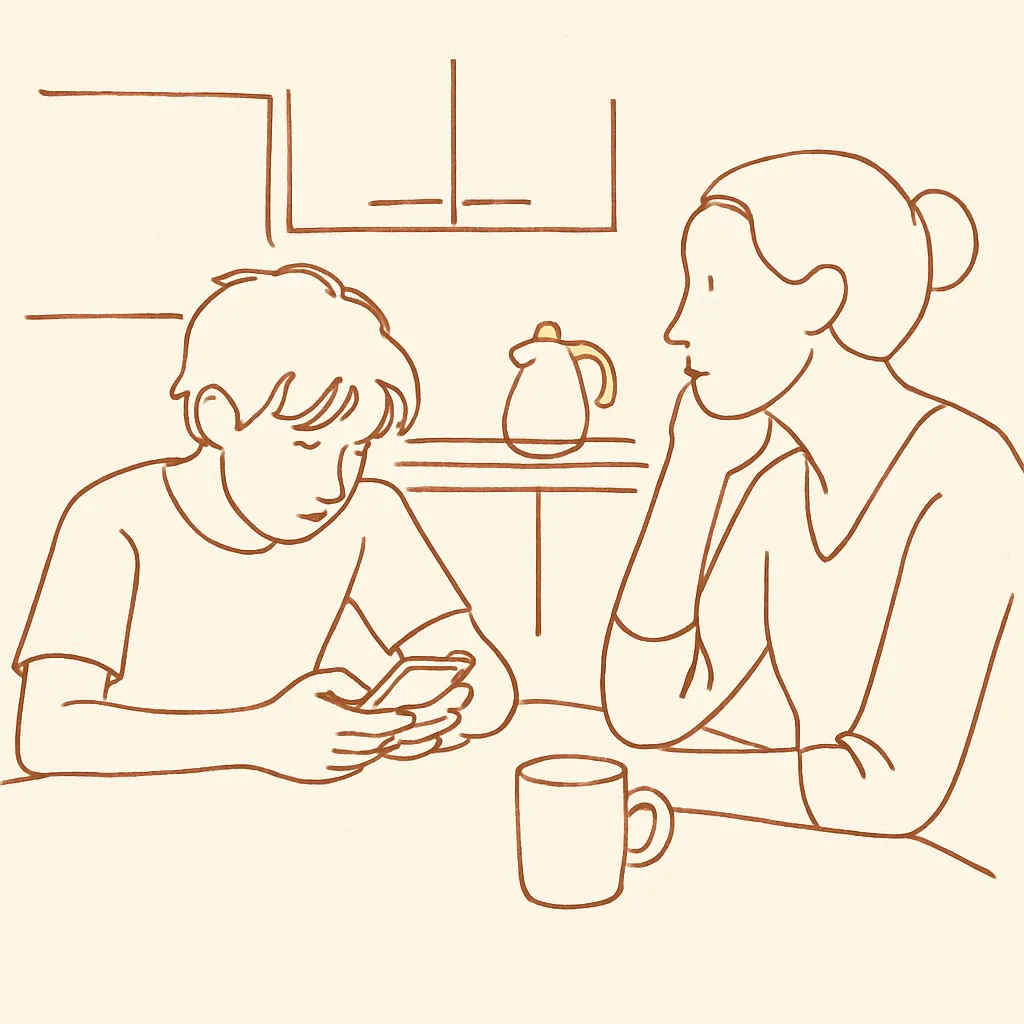
Your 17-year-old, holding the phone: “Jordan asked me to prom on Instagram. I don't want to go with them. How do I say no without being a jerk?” You sit down.
What we usually say — and why it backfires.
Just say no. They'll get over it.
That's not how this works socially.
I went through this at your age. Trust me, rip it off.
(parent's confidence about 1980s prom dynamics doesn't survive contact with 2026 social-graph)
- “Just say no, they'll get over it” misses that public rejection has a real social cost in 2026 (group chats, screenshots).
- “I went through this at your age” imports outdated mechanics into a different social environment.
- Long-term: parents who solve teen social problems with “just” miss the actually-hard part — language.
What works — and why.
Okay. That IS a real problem. Few principles — keep it short, keep it kind, do it in DMs not public, and don't over-explain (long messages read as guilt; short messages read as confident). Something like: 'Hey, thank you so much for asking — I'm really flattered, but I can't go with you. I hope we're cool.' Done. Don't add a 'because' or a 'maybe next year' — those open doors you don't want.
...thanks, that's actually really helpful.
Anyone you DO want to go with?
Maybe. Maya. We haven't talked about it.
Different conversation, when you're ready.
- “Short, kind, private, no over-explanation” is the actual rule that works for rejecting almost anything — work, romance, requests.
- Giving them the literal script (“Hey, thank you so much for asking — I'm really flattered, but I can't go with you. I hope we're cool.”) is the meta-skill they'll use forever.
- “Don't add 'because' or 'maybe next year' — those open doors you don't want” is wisdom about closing things cleanly that most adults haven't articulated.
Key phrases to reach for in the moment.
- That IS a real problem.
- Short, kind, private, no over-explanation.
- [Script: 'Thank you so much for asking — I'm really flattered, but I can't. I hope we're cool.']
- Don't add 'because' or 'maybe next year' — those open doors you don't want.