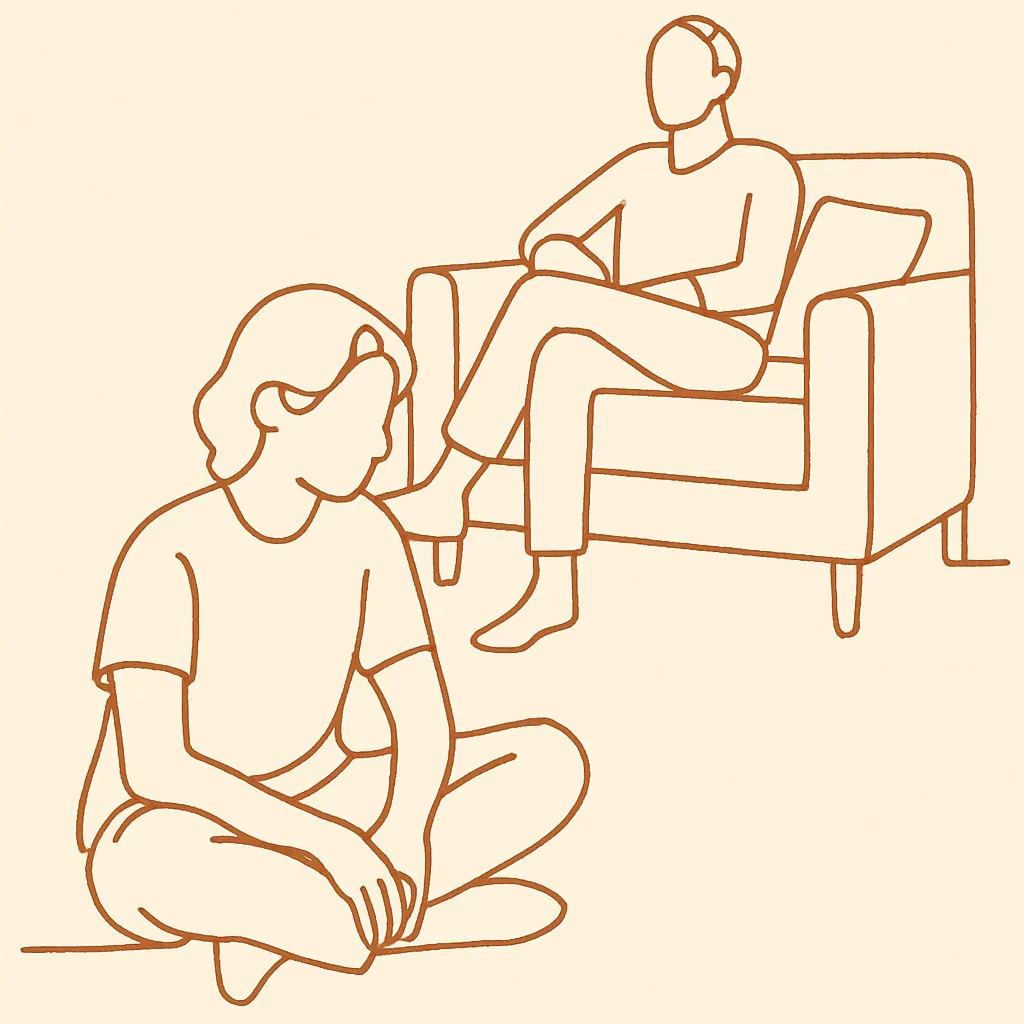
What's happening.
Your 12-year-old, after a sleepover: “Something kind of weird happened at Jordan's house.” You stop what you're doing.
What we usually say — and why it backfires.
What kind of weird? Tell me right now.
Just like… nevermind, it wasn't a big deal.
If you bring it up you have to tell me.
(nevermind. They never tell you the next 'weird' thing they see.)
- “Tell me right now” spikes the stakes and triggers retreat. The teen leads with the casual tone for a reason; match it.
- “If you bring it up you have to tell me” punishes the bringing-up. The teen tries again less often.
- You've now lost the report entirely and may never know what they actually saw.
What works — and why.
Sure, tell me whenever you're ready. Wanna sit?
(sits) Jordan's dad was yelling at his mom really loud. Like, really loud. Jordan went into his room and just put on headphones.
Yeah. That sounds scary to witness, especially in someone else's house where you don't know what to do. How did you feel about it?
Scared for Jordan, kind of. Like, embarrassed for him. Mostly I didn't know what to do.
Totally normal to not know. You were a guest, you couldn't have done much in the moment. I'm going to think about whether and how I check in with Jordan's mom about that, and I'll loop you in before I do anything. Is it okay if I do that?
- “Sure, tell me whenever you're ready” matches the casual tone the teen offered, which is what unlocks the full story.
- Asking how they felt before asking what they want done puts the emotional processing first.
- “I'll loop you in before I do anything” respects that the teen retains some authority over their friend's privacy — and gets you their continued reporting.
Key phrases to reach for in the moment.
- Sure, tell me whenever you're ready.
- How did you feel about it?
- You were a guest, you couldn't have done much in the moment.
- I'll loop you in before I do anything.