What's happening.
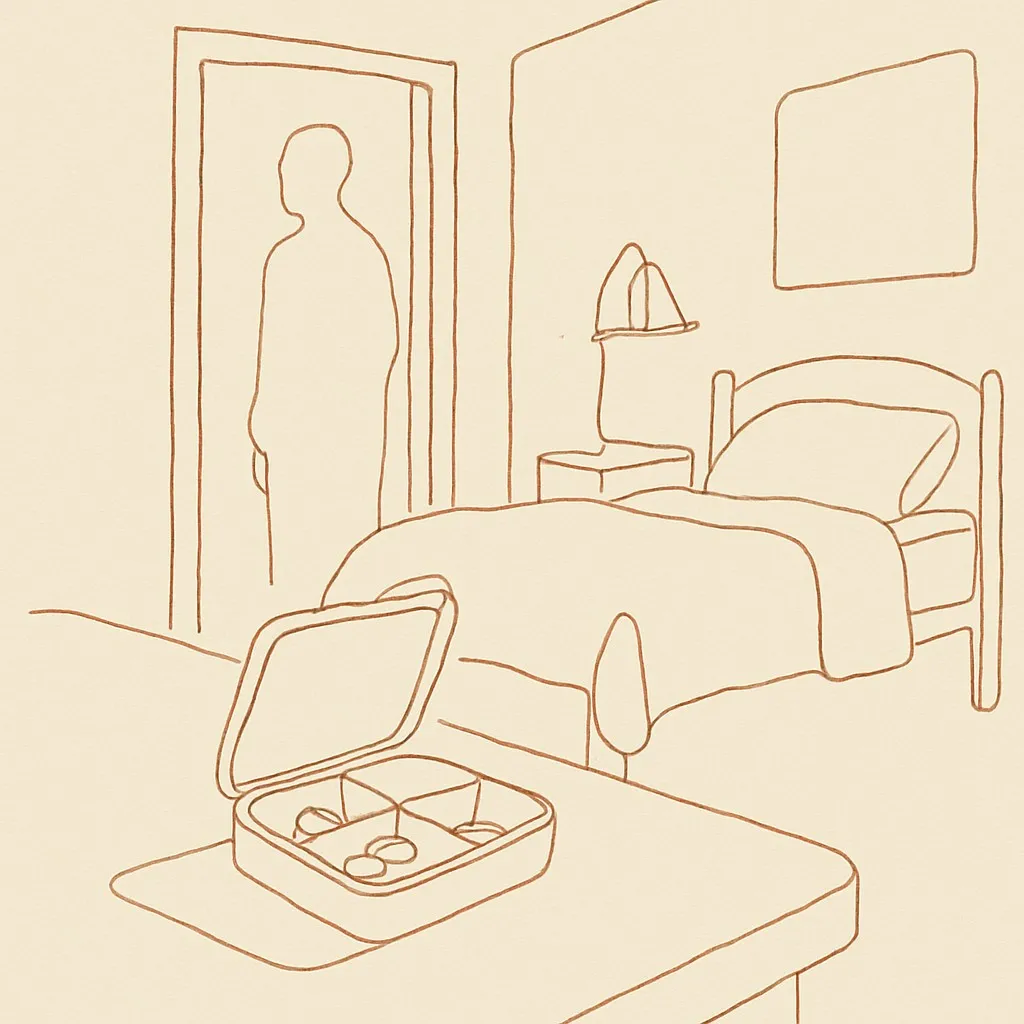
Cleaning. You find a small pill bottle in your 15-year-old's drawer — unfamiliar pills, not their prescription. You sit at the dining table that night with it in front of you when they walk in.
What we usually say — and why it backfires.
(holding up the bottle) WHAT IS THIS?
You went through my STUFF??
Yes I did and don't you dare make this about that. What are these?
Nothing. Adderall from a friend. For studying. It's not a big deal.
- Opening with “WHAT IS THIS” at high volume turns a serious conversation into a scene the teen will retreat from immediately.
- Refusing to acknowledge the privacy issue (“don't make this about that”) cedes moral high ground; both can be true at once.
- The teen minimizes (“it's not a big deal”) because the volume left them no room to be honest. You never find out the full story.
What works — and why.
Sit down. I want to talk about something and I want to be honest about how it came up. I was cleaning, I went into your drawer to put away laundry, I saw this. Going in your drawer wasn't right and I should have asked. AND — I need you to tell me what these are.
...Adderall. From Jordan. For studying for the SAT.
Okay. Two conversations, separate. One: Adderall without a prescription is a controlled substance, the brand-name pills from a friend often aren't even what they say they are anymore, and your heart can do scary things on stimulants. We are going to talk about that — really talk, not lecture. Two: I owe you the privacy apology — going in your drawer was wrong. Going forward I won't do that. Both of these are real. Where do you want to start?
- Owning the privacy violation FIRST disarms the teen's strongest defense and lets the harder conversation proceed.
- Naming the actual risk specifically (counterfeit pills, cardiac risk on stimulants) is the information that lands — generic “drugs bad” doesn't.
- “Where do you want to start?” gives the teen a small agency back in a conversation they otherwise have no control over.
Key phrases to reach for in the moment.
- Sit down. I want to talk about something and I want to be honest about how it came up.
- Going in your drawer wasn't right. AND — I need you to tell me what these are.
- [Specific risk: counterfeit pills, cardiac risk, fentanyl.]
- Two conversations, separate. Where do you want to start?
Adderall and ADHD-stimulants bought outside prescription are increasingly counterfeit — many Snapchat-sourced 'Adderall' pills now contain fentanyl. DEA's One Pill Can Kill campaign. SAMHSA Helpline 1-800-662-HELP. Naloxone (Narcan) should be in the home if there's any chance of unprescribed opioid exposure — pharmacies sell it OTC. If unresponsive or slow breathing: 911 + Narcan + recovery position.