What's happening.
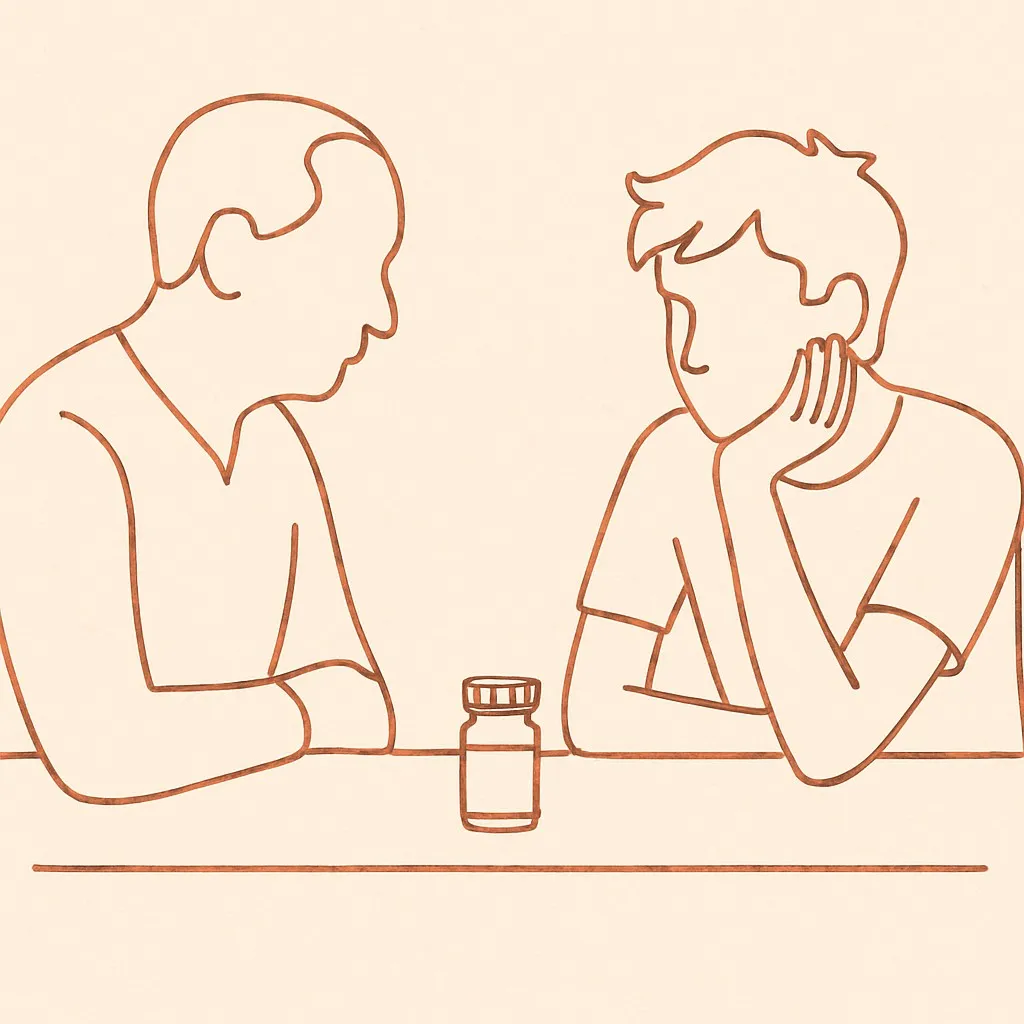
Your 16-year-old, three months into the SSRI that's been working: “I feel fine. I want to come off the meds. I don't want to be on them anymore.” You sit down.
What we usually say — and why it backfires.
Absolutely not. You're on them because you need them.
I've been fine for three months. They're working — that means I should be done.
End of discussion. You stay on them as long as the doctor says.
(quietly stops taking them, doesn't tell you, you find out two months later when the crisis returns)
- “End of discussion” doesn't end the discussion — it just ends the part you're in. They CAN stop taking meds without your permission.
- “You need them because the doctor says so” outsources authority. The teen needs to be a partner in their own treatment for it to actually work long-term.
- Most adolescent medication non-adherence happens silently. The conversation now is what prevents the silent stop in two weeks.
What works — and why.
Okay. That's an important conversation and I'm glad you're bringing it to me, not just stopping. Tell me more — is it that the meds are making you feel off (numb, side effects), or is it that you feel so good you think you don't need them anymore? Those are different conversations.
Mostly the second one. I haven't had a panic attack in two months. I just want to know I'm okay on my own.
I get that. Important thing — SSRIs don't work like Advil; they work BECAUSE you take them consistently, and the goodness you feel now is partly because you ARE on them. Coming off them needs a doctor-supervised taper, not a cold stop, because cold stop creates withdrawal symptoms AND a real risk of the underlying thing coming back. Let's call your doctor this week and have THAT conversation with her — me, you, her. Workable?
- Distinguishing “meds making me feel off” from “I feel so good I think I don't need them” is the diagnostic that surfaces 90% of adolescent medication-quitting motivations.
- “The goodness you feel now is partly because you ARE on them” is real pharmacology and gives the teen accurate model of what the meds are doing.
- Routing to a doctor-supervised taper is the medical truth (cold-stop on SSRIs is genuinely dangerous) AND keeps the teen as a partner.
Key phrases to reach for in the moment.
- I'm glad you're bringing it to me, not just stopping.
- Is it that the meds are making you feel off, or that you feel so good you think you don't need them? Those are different.
- The goodness you feel now is partly because you ARE on them.
- Coming off needs a doctor-supervised taper, not a cold stop.
Abrupt SSRI discontinuation can cause severe withdrawal (discontinuation syndrome) and significantly elevates suicide risk in adolescents. NEVER cold-stop antidepressants without medical supervision. If your teen has already stopped: pediatric psychiatrist or prescribing doctor THIS WEEK. 988 Crisis Lifeline if any suicidal ideation. Same applies to ADHD stimulants (less dangerous to stop but worth a doctor conversation), benzodiazepines (potentially dangerous to stop), and any other psychotropic.