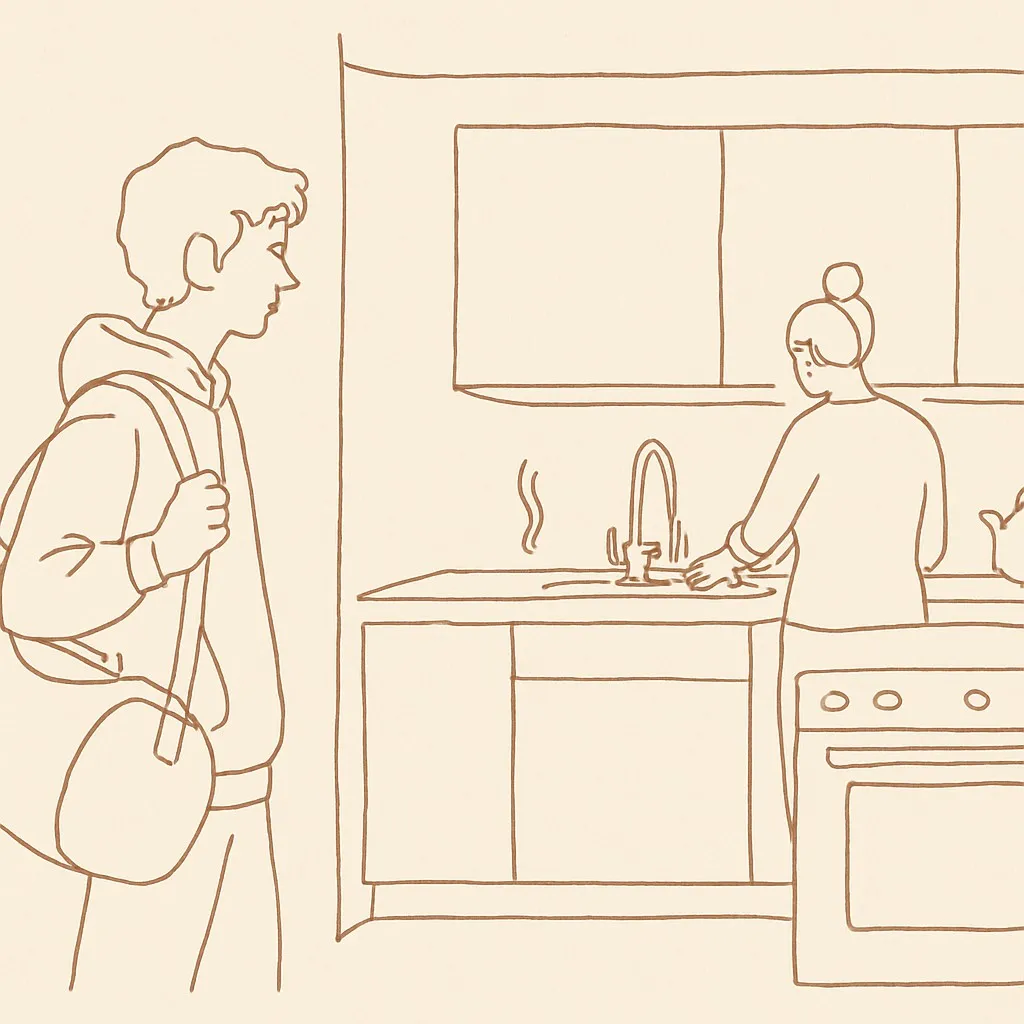
What's happening.
Friday afternoon. Your 13-year-old, sitting on the bag they're supposed to pack: “I don't want to go to Dad's this weekend.” It's the third weekend in a row they've said it.
What we usually say — and why it backfires.
You have to go. It's his weekend.
Why? He doesn't even talk to me when I'm there.
Yeah well, that's between you two. The schedule is the schedule.
Cool. I'll go and stare at the wall.
- “It's his weekend” treats a custody schedule as immovable when it isn't — and dodges the actual concern.
- “That's between you two” passes the buck on a problem your teen is bringing to you for help with.
- “I'll go and stare at the wall” is the compliance-with-resentment outcome — bad for the teen, bad for the dad, bad for the long-term relationship.
What works — and why.
Three weekends in a row — that's not random. Tell me what's going on at Dad's.
He just sits on his phone. We don't do anything. And his girlfriend is always there now and it's weird.
Got it. Two things. One: you do go this weekend, because the schedule matters AND because the way to change it isn't to skip, it's to talk to him. Two: I'd really like you to tell him what you just told me. If that feels too hard, I can text him a heads-up: 'something's coming up this weekend, listen.' Want me to?
...yeah. Maybe just the heads-up.
- “Three weekends in a row — that's not random” validates the pattern instead of fighting the headline.
- Holding the schedule while opening a path to change it is the actual divorce-coparenting move that works. The teen learns to renegotiate, not abandon.
- Offering the heads-up text to Dad lets the teen surface the issue without doing the hardest part alone. Many divorced co-parents accept this graciously — and the teen's weekend often improves.
Key phrases to reach for in the moment.
- Three weekends in a row — that's not random.
- Tell me what's going on at [parent's].
- You do go this weekend, because the way to change it isn't to skip, it's to talk.
- If telling him feels too hard, I can text him a heads-up.